
The 9 Best AI Master’s Programs on the East Coast
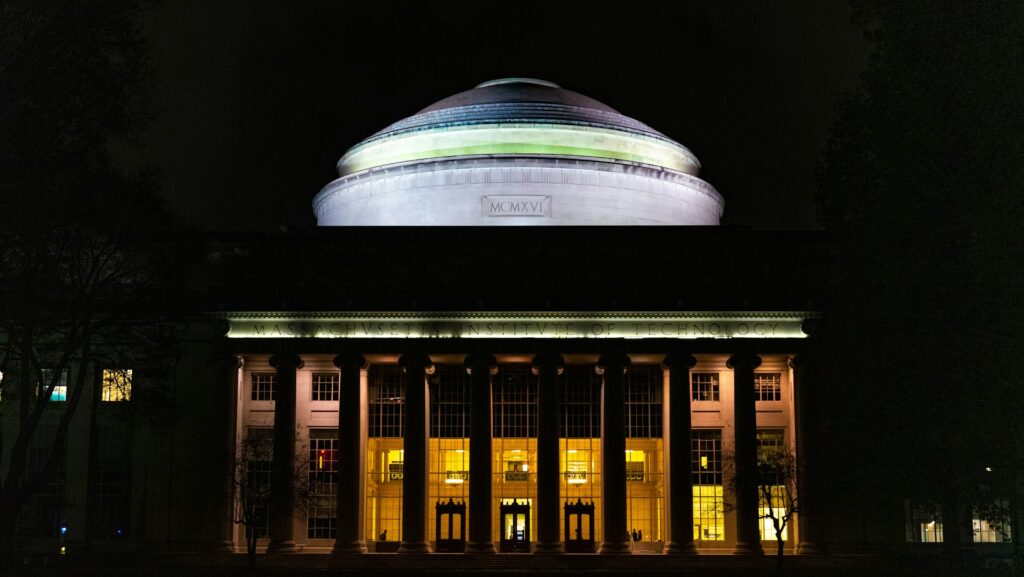
The best AI master’s programs on the East Coast open doors to highly compensated positions at leading technology companies. Industry employers now require advanced degrees for roles such as Principal Data Scientist, Machine Learning Engineer, and AI Architect. Competition for top-tier programs is intense, with acceptance rates between 5% and 15%.
This piece covers nine exceptional AI graduate programs for those ready to advance their career in this faster growing field. You’ll find what sets these best artificial intelligence masters programs apart, from curriculum strengths to career outcomes and admission requirements.
1. Carnegie Mellon University – Master of Science in Machine Learning
Program Overview
Carnegie Mellon University’s Master of Science in Machine Learning is among the premier AI graduate programs. The program targets students who want to pursue advanced study without integrating it into an existing CMU bachelor’s degree. The program spans 16 months and can be completed in three semesters by prepared students, though some finish in four semesters to pursue additional research or strengthen foundational skills. International students on F-1 or J-1 visas must complete the program within three semesters.
The program accepts applications once a year. Students begin coursework in August after applying the previous December. You must attend classes on campus in Pittsburgh. The program does not offer online or distance-learning options. Domestic students who can attend classes in person may study part-time.
Curriculum and Specializations
The curriculum requires six core courses, three elective courses and a practicum. Students must select core courses from separate lines to ensure breadth of knowledge. Students cannot use both Deep Reinforcement Learning (10-703) and Advanced Deep Learning (10-707) to satisfy core requirements. Taking both allows one to count as core and the other as an elective.
Electives provide flexibility for specialization. You can fulfill one, two or three electives through Independent Study. The most common arrangement involves a research project conducted over two semesters and counts as two electives. Projects can range from one semester to three semesters plus the summer practicum. Multiple Special Topics in Machine Learning courses can serve as electives without limitation.
The mandatory practicum consists of one semester of full-time work. Students complete it during summer, focusing on internships or machine learning research. This hands-on component prepares students for industry applications in sectors of all types, from technology companies to startups.
Admissions Requirements
You need a strong background in computer science. This background should include solid understanding of complexity theory and proficient programming skills. The mathematics prerequisite has at least one year of college-level probability and statistics, plus matrix algebra and multivariate calculus. Programming experience in Matlab, R and scipy-numpy proves helpful. Java and Python are more valuable than C.
The program does not require GRE Subject Tests. Non-native English speakers must submit TOEFL scores of 100+, IELTS scores of 7.5 or Duolingo scores of 120.
Applications open in September. The early deadline is usually in November, and the final deadline generally in December. Early applications cost $80 per program. Applications submitted after the November deadline cost $100. You should expect admission decisions in February.
Required materials have transcripts, resume, a one- or two-page statement of purpose and three letters of recommendation. At least two letters should come from faculty or recent employers.
Tuition and Financial Aid
Annual tuition ranges from $54,420 to $60,400, depending on the source year. The program provides no financial support. Students must cover tuition, fees and living expenses independently. Additional costs are housing ($13,680), food ($8,032), books and supplies ($2,212), health insurance ($3,258) and miscellaneous expenses ($3,800). Total annual costs reach approximately $93,010.
Career Outcomes and Industry Connections
The program holds STEM designation and qualifies international students for extended Optional Practical Training. The job market for computer and information technology research scientists projects 26% growth through 2033. Graduates pursue roles as data analysts, machine learning engineers and research scientists. They work at technology companies and innovative startups. The Career and Professional Development Center tracks post-graduate salaries and destination information for all graduates.
2. MIT – Master of Engineering in EECS
Program Overview
MIT’s Master of Engineering in EECS operates differently from typical AI graduate programs. The program accepts only current MIT undergraduates enrolled in specific EECS majors, including 6-3 (Computer Science and Engineering), 6-4 (Artificial Intelligence and Decision Making), 6-5 (Electrical Engineering and Computing), 6-7 (Computer Science and Molecular Biology), and 6-14 (Computer Science, Economics, and Data Science). This restriction makes it one of the most selective pathways among best artificial intelligence masters programs on the East Coast.
The five-year structure allows you to earn both bachelor’s and master’s degrees through simultaneous or sequential completion. Most students apply during their junior or senior years. This gives them enough time to prepare if accepted. Students often begin research as undergraduates through the Undergraduate Research Opportunities Program (UROP) or SuperUROP. They establish early connections with faculty and labs.
Curriculum and Specializations
You’ll complete graduate-level subjects, fulfill a professional perspective requirement, and produce a thesis. The thesis is the program’s core component and offers two distinct pathways for completion. You can conduct research in an on-campus laboratory or partner with an industry organization through the 6-A program.
The graduate curriculum requires four graduate subjects totaling at least 48 units from a list specified by EECS. You must select these courses so that at least three satisfy requirements for one of the department’s concentration fields. You’ll complete 6.THM (Master of Engineering Program Thesis), accounting for 24 units, and 6.9830 (Professional Perspective Internship), worth 1 unit. Additional subjects that satisfy degree requirements in Course 6 or Course 18 must total at least 18 units.
Admissions Requirements
MEng admission occurs through the EECS Undergraduate Office rather than graduate admissions, unlike external master’s programs. You must hold or simultaneously receive one of the eligible Bachelor of Science degrees listed in the program overview. The internal application process assesses your undergraduate performance, research experience, and readiness for graduate-level work.
The department hosts about 700 graduate students in the doctoral program at any given time. The MEng is a separate track designed for continuing MIT undergraduates.
Tuition and Financial Aid
The MEng program does not guarantee funding. Eligible students typically secure support through Teaching Assistantships or Research Assistantships. Full-time assistantships cover your monthly stipend, complete tuition, and health insurance. You’ll work about 20 hours weekly with a TAship and assist with course instruction. RAships involve 20 hours of weekly research, often related to your thesis project.
MEng students qualify for graduate support during their first three regular graduate terms, excluding summers. You may request one additional term of support eligibility if you’ve served as a graduate TA at least once or face unusual circumstances that delay thesis progress.
The 6A Program offers an alternative funding pathway that combines a full-time, paid industry internship with your thesis work. Students in this program work full-time at a company for six months, receive discounted tuition, and earn salary directly from their employer.
Career Outcomes and Industry Connections
79% of 2023 master’s degree graduates entered the workforce after graduating. 87% of those seeking immediate employment got jobs within three months of graduation. The program’s STEM designation qualifies international students for extended Optional Practical Training periods.
46% of master’s graduates become founding members of companies, which reflects MIT’s entrepreneurial ecosystem. Graduates pursue roles at technology companies, startups, research institutions, and government agencies. The EECS network provides access to leadership positions in nearly every technology sector.
3. Cornell University – Master of Science in Computer Science
Program Overview
Cornell’s Master of Science in Computer Science offers a research path with full funding. This stands apart from professional master’s programs at other institutions. The four-semester program admits a selective cohort of 10-15 students each year and keeps total enrollment at 25-30 students at any time. This small size reflects limited resources shared with the PhD program. These include TA-ships, tuition funding, stipends, office space and faculty advising availability.
The program shows strong preference for Cornell undergraduates. Applicants from other institutions with comparable academic backgrounds may apply too. This MS requires specialized area coursework coupled with completion of a thesis. Professional degrees emphasize coursework, but this program is different. It provides advanced knowledge in specific computer science domains. Research areas span artificial intelligence, computational biology, database systems, graphics and human-computer interaction. You can also work in machine learning, natural language processing, robotics, scientific computing, security, systems and networking, theory of computation or vision.
Curriculum and Specializations
You’ll complete specialized coursework in your chosen research area. Substantial effort goes to thesis development. The MEng program focuses on coursework with a capstone project that advances industry placement. The curriculum here is different. Your MS thesis contributes new knowledge to the field and positions you for research-oriented career paths.
Teaching assistantships are an integral part of the program. You’ll serve as a full-time TA during each of the four semesters. Fifteen hours weekly go to TA duties. Performance evaluations occur at semester end. You must rank among top TAs in assigned courses to remain in good standing. This teaching experience builds expository skills valuable for future academic or industry research positions.
Admissions Requirements
A Bachelor’s degree in computer science is required. Strong preference goes to Cornell undergraduates. You must demonstrate an outstanding record as an undergraduate teaching assistant in one or more computer science courses. Experience as an undergraduate researcher is recommended.
Applications must be submitted through the Graduate School online system by the January 18 deadline for Fall admissions. You’ll need prerequisite coursework equivalent to Cornell’s CS 2110 (Object-Oriented Programming), CS 3110 (Functional Programming), CS 2800 (Discrete Structures) and CS 3410 (Computer System Organization).
Three letters of recommendation are mandatory. At least one must address your expository skills and classroom work ability. Your essay should explain how the degree program and predicted thesis area line up with career plans. International applicants must demonstrate English language competency through TOEFL scores that meet minimum thresholds: Speaking 5.5 or higher, Reading 4 or higher, Listening 3.5 or higher and Writing 4 or higher.
Tuition and Financial Aid
Students admitted into the program receive full funding that covers tuition, a stipend for simple living expenses and health insurance. This support continues throughout the four semesters in exchange for TA service. Limited summer instructorships, TA-ships and research assistantships exist but are not guaranteed.
The funding model contrasts with professional master’s programs where students assume financial responsibility. Admission remains competitive given resource constraints and the funded structure.
Career Outcomes and Industry Connections
Graduates pursue development or research positions in industry, continue to PhD programs or get teaching positions. The research-intensive training prepares you for roles that require deep technical expertise and independent problem-solving capabilities. The MS is not a stepping stone to Cornell’s CS PhD program. Strong performance may support PhD applications during your second year of study, though.
4. Columbia University – Master of Science in Computer Science (Machine Learning Track)
Program Overview
Columbia’s machine learning track within the Master of Science in Computer Science targets professionals seeking specialized AI expertise in the heart of New York City’s technology ecosystem. The program requires 30 graduate points completed at the 4000 level or above while maintaining at least a 2.7 GPA. You’ll study in an environment that provides excellent career opportunities in industries of all types, from finance to media to emerging startups.
The program accepts applications for both fall and spring admission. Priority deadline falls on January 15 for fall entry, with a regular deadline of February 15. Spring applicants face an October 15 deadline. Unlike many peer institutions, Columbia requires a mandatory video interview as part of the application process. This interview assesses your communication skills and how well you think under time pressure.
Curriculum and Specializations
You’ll complete two foundational courses and select from Group A options like Introduction to Computational Learning Theory, Machine Learning, Advanced Machine Learning, or Neural Networks & Deep Learning. One foundational course must come from Group A at minimum, though you can take one from Group B covering Computer Vision, Natural Language Processing, or Robotics.
Beyond foundational work, you’ll choose two secondary electives, with one at the 6000 level at minimum. The curriculum offers flexibility through courses spanning computational genomics, information theory, Bayesian models, and reinforcement learning. You must complete 6 points of technical courses at the 6000 level at minimum.
Admissions Requirements
Most admitted candidates hold undergraduate degrees in computer science, though applicants from other disciplines with strong records are encouraged to apply. You must complete four computer science courses covering the foundations of the field plus two mathematics courses: linear algebra and differential equations. These prerequisites must be grade-bearing and credit-bearing from a university. MOOCs like Coursera or edX do not satisfy this requirement.
Successful applicants maintain GPAs of 3.5 or higher, though the minimum is 3.3. GRE scores are optional for admission. International applicants need TOEFL scores of 101 or IELTS scores of 7 for recommended admission standing. The application package requires three recommendation letters, transcripts, a resume, and a personal statement between 250 and 1,000 words.
Tuition and Financial Aid
Tuition costs $2,822 per point for the 2026-2027 academic year. The 30-point program totals $84,660 in tuition alone approximately, with additional fees for health insurance ($5,903), health services ($1,518), and student activities ($960). Students in the Artificial Intelligence program incur an additional $1,144 program fee.
Financial support options include merit-based fellowships such as the Dean’s MS Academic Excellence Fellowship and the CMA CGM Excellence Fund. This fund provides $50,000 awards to outstanding students who show academic excellence and financial need.
Career Outcomes and Industry Connections
The department enrolls close to 1,200 students in undergraduate and graduate programs. Most MS students graduate in December and secure full-time positions starting in January. The Graduate Career Placement Team connects you with employers through information sessions, tech talks, and alumni panels. Companies hosting departmental sessions include Apple, Amazon, Bloomberg, and Goldman Sachs. Career Placement Officers serve as your main contact throughout the program and ensure preparation for professional advancement.
5. University of Pennsylvania – Master of Science in Artificial Intelligence
Program Overview
Penn Engineering launched the first Ivy League online master’s degree in artificial intelligence in April 2024, with the inaugural cohort beginning classes in spring 2025. The Raj and Neera Singh Program in Artificial Intelligence Master of Science in Engineering operates online with no required immediate sessions and allows students worldwide to benefit from Penn’s research expertise. Chris Callison-Burch, an Associate Professor in Computer and Information Science and AI expert, leads the program.
The online format accommodates working professionals who continue full-time employment while pursuing their degrees. You can complete coursework asynchronously from anywhere, unlike traditional campus-based AI graduate programs. Faculty offer evening office hours to support students across time zones.
Curriculum and Specializations
The program requires 10 course units distributed across seven core courses, two technical electives, and one free elective. Core courses include Artificial Intelligence, Natural Language Processing, Machine Learning for Data Science, Statistics for Data Science, Principles of Deep Learning, Technology Ethics and the Legal Landscape, and either Internet and Web Systems or GPU Computing for Machine Learning Systems.
You must take CIS 5210 Artificial Intelligence during your first semester. Technical electives span options like Algorithms for Big Data, Networked Systems, Computer Vision, and an Artificial Intelligence Capstone. One can fulfill a technical elective requirement if you complete eight core courses. The free elective accepts any online EAS, CIS, ESE, or ENGR course.
Admissions Requirements
You need a computer science background meeting one of three criteria to gain admission: a Bachelor’s degree in computer science or computer engineering, a Bachelor’s degree in a field like it, or a Bachelor’s degree in any field with specific prerequisite coursework. Applications remain open year-round on a rolling basis. Early submission accelerates your admissions decision, though.
Required materials include a one- to two-page resume, a 1,000 to 1,500-word essay with detailed examples from academia or industry, two letters of recommendation from academic or work evaluators, unofficial transcripts, and a $95 application fee. International applicants must submit TOEFL scores of 100 or higher, IELTS scores of 7.5, or Duolingo scores of 120. This requirement is waived for degrees completed where English was the medium of instruction.
Tuition and Financial Aid
Tuition costs $3,859 per course unit with an additional $168 online services fee per unit. The 10-unit program totals approximately $40,270 in tuition and fees. U.S. citizens and permanent residents qualify for the Penn Engineering Graduate Scholarship at application submission. Students enrolled in at least two courses can apply to get federal student loans.
Career Outcomes and Industry Connections
Penn’s School of Engineering and Applied Science reported median starting salaries of $122,500. Engineering represented 30.2% of graduate students pursuing advanced degrees, the most popular field. The program’s STEM designation enables international students to access extended work authorization following graduation.
6. Johns Hopkins University – Master of Science in Artificial Intelligence
Program Overview
Johns Hopkins offers flexibility through both online and full-time in-person formats at the Bloomberg Center in Washington, DC. The DC program delivers an accelerated 16-month timeline compared to traditional 2.5+ year programs. This positions you in the capital’s federal AI ecosystem among Fortune 500 employers, national labs and defense contractors. Faculty from Johns Hopkins Applied Physics Laboratory teach with researchers and industry experts and create direct pathways into government technology and cybersecurity sectors.
The online program serves working professionals through asynchronous courses and allows you to maintain employment while earning your degree. Both formats draw from one of the nation’s first AI master’s programs developed with Applied Physics Lab expertise.
Curriculum and Specializations
Core courses include Advanced Analytical Methods in AI, AI Algorithm Design and Analysis, Applied Machine Learning, Creating AI Enabled Systems and Introduction to Generative AI. The curriculum spans generative AI, large language models, computer vision, natural language processing and robotics. You’ll select six electives from options like Deep Learning Developments with PyTorch and Reinforcement Learning, with at least four from the AI elective list and three at the 700-level.
Admissions Requirements
Applicants need single and multivariable calculus, one semester each of linear algebra and probability/statistics, plus two semesters of intermediate Python, Java or C++. Summer 2027 brings a change in requirements to Calculus I and II, one additional mathematics course beyond Calculus II and two programming semesters. Provisional admission allows you to complete missing prerequisites through Johns Hopkins or regionally accredited institutions. Applications require official transcripts, three recommendation letters and statement of purpose.
Tuition and Financial Aid
Full-time DC program tuition totals $68,680 for fall and spring semesters, plus a $500 matriculation fee and $3,292 health insurance. Fall candidates receive a standard 10% tuition fellowship per semester, with additional need-based aid available. Total cost of attendance reaches $106,646 and includes housing, food and living expenses.
Career Outcomes and Industry Connections
Professionals in AI earn average salaries between $145,000 and $160,000. Employment in computer and information research science is projected to grow 20% by 2034. Graduates pursue roles as AI architects, machine learning engineers, robotics engineers, data scientists and NLP engineers.
7. New York University – Master of Science in Computer Science (AI Concentration)
Program Overview
NYU’s Courant Institute of Mathematical Sciences houses one of the best artificial intelligence masters programs. Founded in 1969, it serves as a premier research center for AI, systems and theory. The MS in Computer Science offers dedicated AI concentration tracks and distinguishes itself from the separate Tandon School program. You’ll study in Manhattan’s technology corridor with direct access to major companies, startups and research organizations. The program spans three to four semesters for the standard 30-credit degree or extends to 36 credits with a formal concentration.
Curriculum and Specializations
The AI concentration requires you to complete three foundational courses in Fundamental Algorithms, Programming Languages and Operating Systems while maintaining a B- average or better. You must then complete 12 credits in AI-specific coursework. This includes either Artificial Intelligence or Machine Learning, two approved AI electives and an AI capstone course where you earn a B grade or higher. Capstone options include Deep Learning, taught by Yann LeCun. The course covers representation learning and applications to computer vision and natural language understanding. Other specialized courses span Natural Language Processing, Machine Learning and advanced topics in neural computation.
Admissions Requirements
Applications open with deadlines of February 14 for fall admission and November 1 for spring entry. You’ll submit two written essay responses that address your academic background and five-year post-graduation plans. The application requires two letters of recommendation. Prerequisites cover at least one year of university-level science, proficiency in C++ or similar languages and mathematics through calculus.
Tuition and Financial Aid
First-year tuition costs $37,451. The full 30-credit program totals approximately $75,750. All full-time applicants receive merit scholarship review based on academic performance. U.S. citizens and permanent residents’ access federal aid through FAFSA (school code 002785), and payment plans extend tuition payments over time.
Career Outcomes and Industry Connections
Students benefit from strong internship opportunities within NYC’s technology ecosystem. Recent Data Science alumni report average salaries of $128,000. Graduates pursue careers in software engineering, artificial intelligence, machine learning and cybersecurity.
8. Northwestern University – Master of Science in Artificial Intelligence
Program Overview
Northwestern’s 15-month MSAI distinguishes itself through human-centered AI development at the McCormick School of Engineering in Evanston. The program caps enrollment at 45 students annually. It offers two distinct tracks: the traditional path for industry practitioners building complex AI systems and MSAI+X for professionals integrating AI into their original fields. This structure serves professionals who understand that AI systems must partner with human users rather than replace them.
Curriculum and Specializations
The curriculum extends beyond technical AI implementation. It addresses psychological design implications of human-intelligent system interactions and business deployment considerations. You’ll complete a capstone project with direct industry collaboration and an optional three-month summer internship. Faculty from Northwestern and leading AI executives provide exposure to state-of-the-art research in AI systems of all types.
Admissions Requirements
You need a BA/BS in Computer Science or related fields. Strong preference goes to applicants holding at least two years of work experience in development, design, or software architecture. The recommended deadline falls on December 15, with a final deadline of April 15. Applications require three letters of recommendation and evidence of self-directed Computer Science work through platforms like Github. You must also submit a two-part personal statement addressing motivations (500 words) and the most important AI problems (300 words). GRE scores remain optional. International applicants must score 600+ on paper-based TOEFL or 100+ on internet-based TOEFL, or achieve IELTS scores of 7.0 or higher.
Tuition and Financial Aid
Tuition costs $23,662 per quarter. Traditional track students pay for four quarters (fall I, winter, spring, fall II). MSAI+X students start in summer with one course then pay for three full-time quarters. Total program cost reaches approximately $125,000 and includes living expenses. The program does not offer institutional grants, scholarships, or teaching assistantships directly.
Career Outcomes and Industry Connections
Graduates work with corporate partnerships spanning nationwide companies in a variety of sectors. The capstone structure and optional internship create direct pathways into AI leadership roles. They prepare you to conceive, design, and integrate systems addressing global problems.
9. George Mason University – Master of Science in Artificial Intelligence
Program Overview
George Mason University became Virginia’s first public university to offer a standalone master’s in artificial intelligence starting fall 2025. The program sits in Northern Virginia’s technology hub and offers evening courses designed to serve working professionals. Amarda Shehu, the university’s vice president and chief AI officer, leads the initiative. You can complete the degree in 1.5-2 years by taking 3-4 courses per semester.
Curriculum and Specializations
The 30-credit program consists of 18 required core credits and 12 elective credits. Core courses span machine learning foundations and deep learning fundamentals. You’ll select at least 3 credits from each of four specialized tracks: AI Policy, Ethics, and Society; Advanced AI; Flexible and Secure AI Infrastructures; and User-Inspired AI.
Admissions Requirements
You need a bachelor’s degree in engineering or a quantitative discipline. Prerequisites include mathematics through calculus, matrix algebra and programming proficiency in Python or R. Each student completes an assessment process that determines readiness. Free short courses are available to strengthen foundational knowledge.
Tuition and Financial Aid
Graduate tuition costs $18,681 annually for Virginia residents and $41,782 for out-of-state students based on 9 credits per semester. The $60 new graduate student fee applies at registration.
Career Outcomes and Industry Connections
George Mason graduates achieved a 92% positive career outcome rate within six months, with a $73,000 median starting salary. The university received a $1 million grant to establish the nation’s first Center for AI Innovation for Economic Competitiveness.
Next Steps
Choosing the right AI master’s program depends on your specific career goals and circumstances. Some programs offer fully funded research opportunities, while others provide flexible online formats for working professionals. The competition is intense across all nine programs. Acceptance rates frequently fall below 15%. Your background in mathematics, programming and prior research experience will determine which programs line up best with your qualifications. Think over factors beyond rankings such as funding availability, location priorities and whether you want research-focused training or industry preparation. Take time to review each program’s strengths against your long-term objectives before applying.